

How Many Backlinks Do You Really Need to Rank in 2026?
 Catalin Dinca
Ask ten SEO professionals how many backlinks you need to rank and you will get ten different answers. Some will tell you it depends. Others will throw out numbers that sound authoritative but have no real foundation behind them. Neither response actually helps you plan a campaign or set a realistic expectation for your client.
The honest truth is more nuanced than either camp admits. There is no single universal backlink number. What you need is enough trustworthy, relevant referring domains to close the specific gap between your page and the weakest comparable result that is currently sitting above you. That gap is different for every query, every niche, and every domain. But it is calculable — and that is what this guide walks you through.
Why Most Backlink Advice Fails You
The internet is full of posts claiming things like "you need 50 backlinks for low competition keywords and 200 for high competition." Those numbers are made up. They are not based on data from your actual SERP, your domain's existing authority, or the content quality of the pages you are competing against.
The problem runs deeper than bad advice, though. Most people who ask "how many backlinks do I need?" are actually asking the wrong question. They are treating link building as a standalone activity that exists separately from the rest of their SEO — something you bolt on after the content is live. That mental model was never fully accurate, and in 2026 it actively leads you astray.
Google has been clear for years that rankings depend on a wide mix of signals. PageRank-style link analysis still matters — it has not gone anywhere. But it operates inside a system that also weighs content quality, topical authority, user intent matching, internal linking structure, and dozens of other factors at both the page and site level. Treating backlinks as a dial you turn up until the page ranks is like trying to win a cooking competition by adding more salt without tasting anything.
That said, links are real. The correlation data is real. The question of how many you need is answerable — just not with a single number.
What a Backlink Actually Does
Before getting into targets, it helps to be clear about what a backlink actually contributes to a ranking — not the simplified version, the real one.
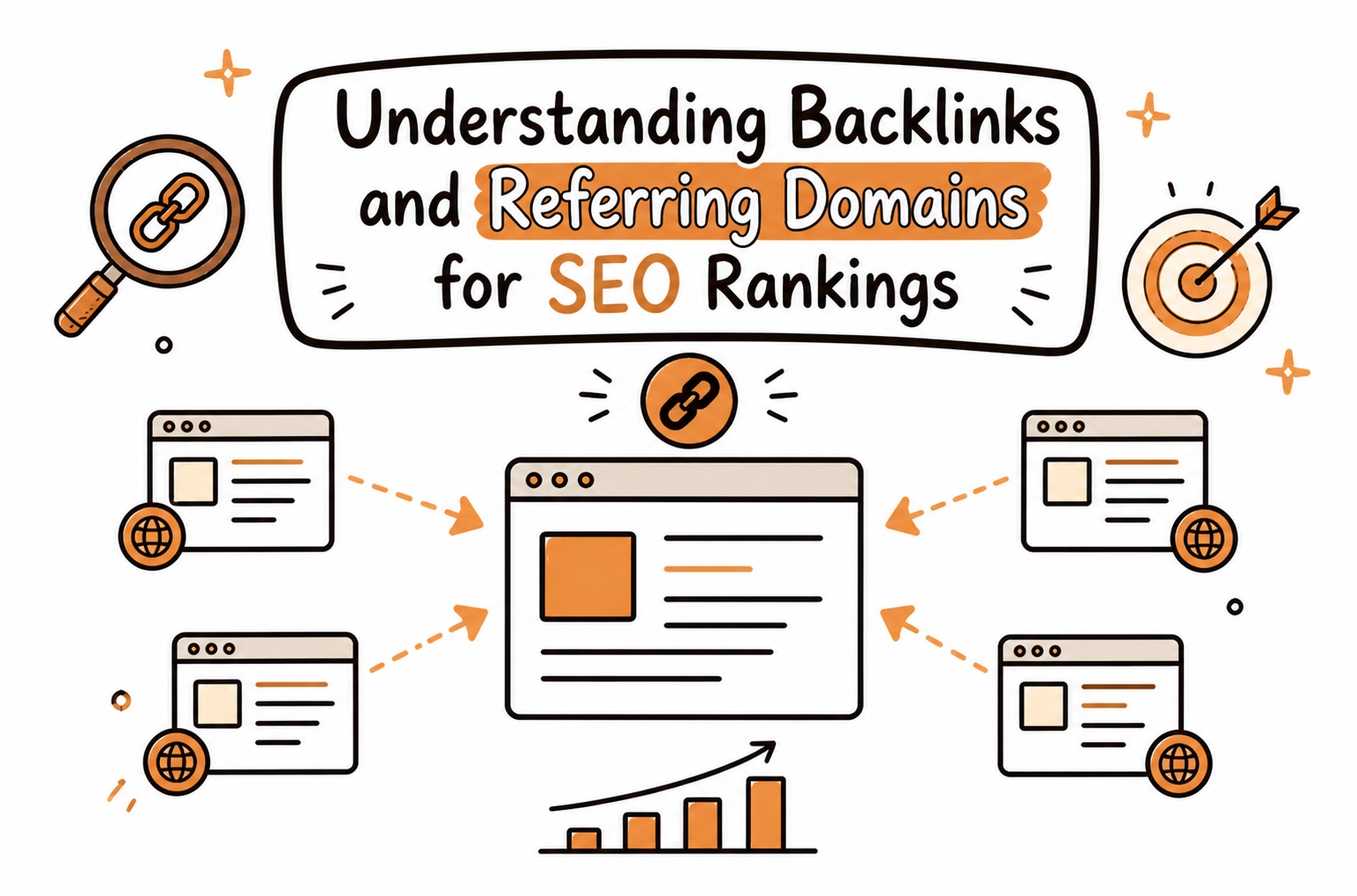
When another website links to your page, two things happen. First, Google discovers your page more easily. Crawlers follow links, so more links from credible sites generally means faster and more reliable crawling. Second, and more importantly for rankings, the link carries an inference signal. Google uses link patterns to understand what a page is about, whether it is considered useful by the broader web, and which results are likely to serve a given query well.
But here is where the folk version of link theory breaks down. Links are not infinitely stackable points. Ten links from the same domain count far less than ten links from ten different domains. A link from a topically relevant site in your niche carries more weight than a link from a general directory that links to thousands of unrelated pages. A link embedded in the body text of a genuine editorial piece is processed differently than a link buried in a sidebar widget.
And crucially: bad links can work against you. Google's spam policies specifically call out excessive reciprocal linking, automated link generation, and low-quality directory submissions as manipulative practices. These are not just ignored — they can actively undermine what your legitimate links are doing.
The cleaner mental model is this: think of each referring domain as one distinct endorsement from a separate source. What you are building is a portfolio of endorsements that are relevant, credible, and editorially justified.
What the Research Actually Shows
Two studies from 2025 and 2026 are worth knowing because they ground the conversation in something other than opinion.
An analysis covering one million US SERPs found that referring domains at the page level correlated with rankings at a Spearman coefficient of 0.255. Total backlink count came in slightly lower at 0.248. Domain Rating, which measures site-wide authority rather than page-level links, correlated at just 0.131. The practical implication: when you are setting a link target for a specific page, page-level referring domains is the right metric to build around, not raw link totals or site-wide authority scores.
The same research found that link correlations were noticeably stronger for high-volume searches, local queries, and informational content. If you are trying to rank a how-to guide or a local service page, links carry more weight in those SERPs than they might on a branded navigational query.
A separate analysis of 11.8 million Google results found that the top-ranked page averaged 3.8 times more backlinks than pages ranking in positions two through ten. That sounds dramatic, but before you conclude that you need to triple your competitors' link counts, consider that roughly 95 percent of all pages on the web have zero backlinks. The bar for most queries is lower than the averages suggest — because the averages include every indexed page on the internet, including millions of pages no one ever links to.
One more nuance worth noting: link correlations have softened slightly compared to measurements taken in 2019 for non-branded queries. Links still matter. Their relative weight in the overall ranking calculation is simply smaller than it was before Google's ranking systems became as sophisticated as they are now.
How to Calculate the Number You Actually Need
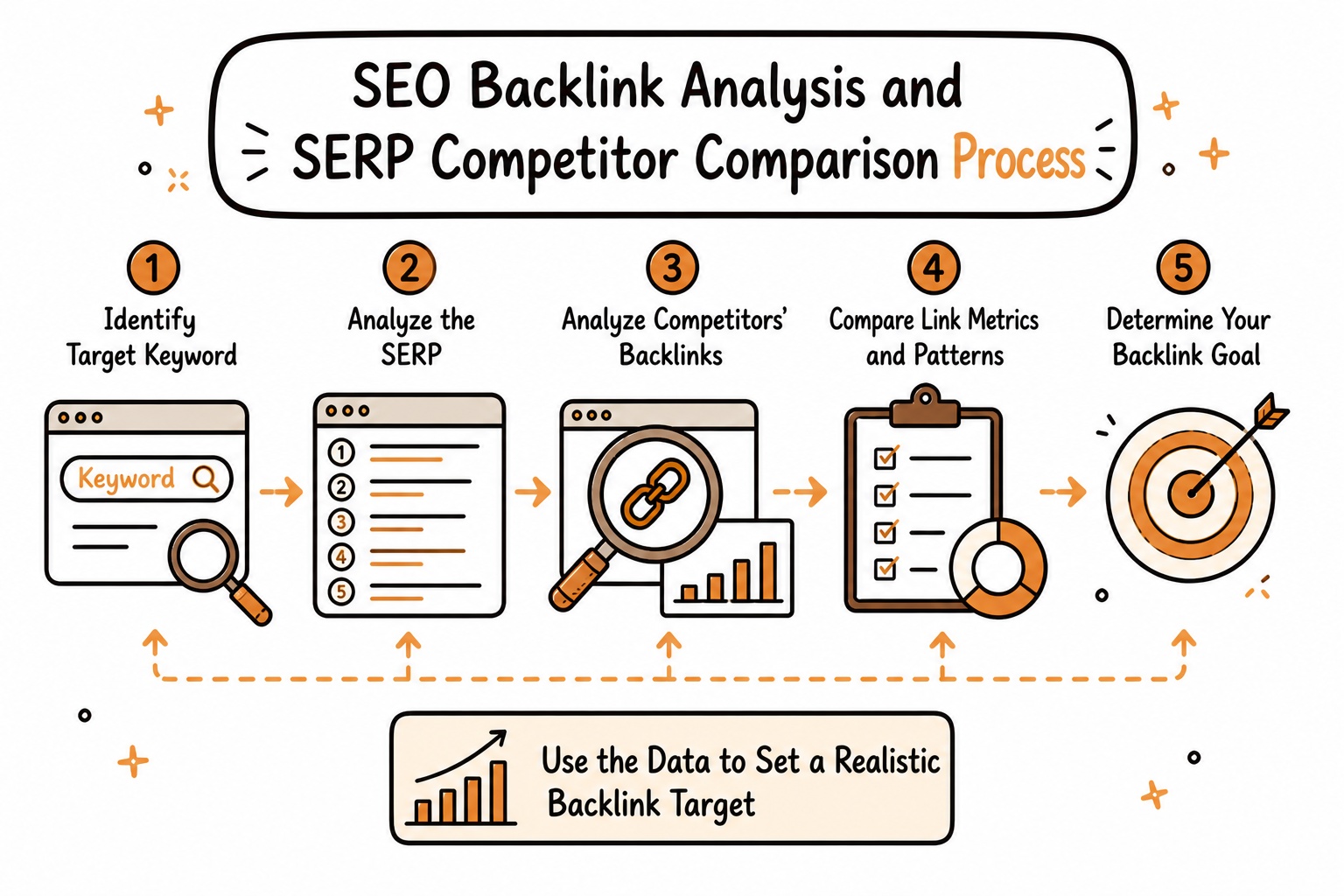
This is the framework that replaces guesswork. It takes about twenty minutes per keyword and produces a target you can actually defend.
Start with a single keyword and a single page. Do not ask how many backlinks your entire site needs. That question is too abstract to be useful. Pick one keyword cluster and the specific page that should rank for it. Everything else follows from that specificity.
Pull the live search results for that query. Look at the top ten organic results in the country and on the device you care about. Do not assume desktop and mobile SERPs are identical — they often are not. For local queries, separate your analysis of the local pack from the organic results beneath it.
Remove the results you cannot realistically compete with. This is the step most people skip, and skipping it will inflate your targets significantly. If a major brand's homepage is ranking for your keyword, that result is winning largely because of site-wide authority that has nothing to do with the content on that page. A Reddit thread, a government domain, or a Wikipedia page plays a fundamentally different game. Strip these out and focus on the pages that are genuinely competing on the same basis you are.
For each comparable result, record the page-level referring domains, an approximate measure of site strength, the page type, and whether the page is actually addressing the query better than yours. You are not just counting links — you are assessing whether those links are the reason the page is ranking or whether something else is doing the work.
Calculate two thresholds. Take the median referring domains for comparable results in positions four through ten. That is your entry target — what you need to get onto page one. Then take the median for positions one through three. That is your breakout target — what you need to compete for the visible top.
Working in two stages is deliberate. Many campaigns try to match the top result from day one and burn budget before they ever test whether their content can rank at all. Getting to page one first tells you whether the fundamental strategy is working before you invest in a push to position one.
Adjust the numbers based on context. If your domain is noticeably weaker than your competitors in the filtered list, add a buffer. If your page addresses the intent more precisely than the pages currently ranking, you can probably get away with fewer links. If the niche is local or high-volume, expect to need a few more. If your content is genuinely better — more comprehensive, more recent, more specific — that quality edge can offset some of the link gap.
Three Real-World Scenarios
Rather than generic tiers, here are three situations that illustrate how the math plays out differently depending on context.
A mid-competition informational guide. Imagine you have written a detailed integration guide for a SaaS product. After stripping out a major brand homepage and a Reddit thread, the remaining comparable page-one results have page-level referring domains in the range of 11, 14, 18, 22, and 29. Your page currently has 3.
Your entry target is somewhere in the teens. Your breakout target is in the twenties. If your guide is genuinely more thorough than the current results, a first campaign targeting 10 to 15 new referring domains from relevant sources is a sensible starting point. There is no strategic reason to aim for 29 on the first campaign.
A local service page. Say you run a plumbing business and you are targeting a city-level service keyword. After stripping out local directory pages and national brand sites, the comparable organic results have 4, 6, 7, 9, and 10 referring domains. Your page has none.
Links carry more weight on local queries than many people assume. Google's local prominence factor explicitly incorporates link signals alongside review volume and citation consistency. A first milestone of 5 to 8 relevant local or industry referring domains — combined with a strong Google Business Profile and active review generation — is realistic and achievable within a few months.
A highly competitive national commercial term. Now imagine you are going after a high-value keyword in a SERP dominated by established players. After filtering, the comparable results have 42, 57, 71, 88, and 110 referring domains. Your page has 8.
In this case, page-level links alone are unlikely to close the gap, especially on a younger domain. Site-wide authority, branded search signals, content quality, and internal linking structure all need to be pulling in the right direction before another link campaign will move rankings noticeably. The link target is real — it is just not the only thing that needs to change.
When More Links Will Not Help
This is the part of the backlink conversation that is almost never discussed, and it is where a lot of SEO budgets disappear quietly.
More links will not rescue a page if the content is thin, generic, or outdated. They will not help if the page format does not match what the search results are demanding — trying to rank a blog post on a SERP that is returning product pages, or a product page on a SERP dominated by comparison articles. They will not fix a page that is cannibalizing another page on your own site. They will not overcome poor internal linking that is starving the page of authority from your own domain.
Google's systems are not naive. If a page is failing because of intent mismatch or content quality, adding referring domains does not address the actual problem. The links accumulate without producing results, the campaign looks like a failure, and the conclusion drawn is that SEO does not work — when the actual diagnosis is that the wrong problem was being solved.
Before investing in any link building campaign, it is worth running a proper content and technical audit to confirm that links are actually the bottleneck. An AI-powered SEO audit can surface these issues quickly and prevent budget from going to link acquisition when on-page work would move the needle faster.
Backlinks in the Age of AI Search
The context for backlinks has shifted in one additional way that is specific to 2026 and worth addressing directly.
Google's AI Overviews and AI Mode have changed the click landscape for informational queries. One study found that the presence of an AI Overview correlates with roughly a 34 percent lower click-through rate for the top organic result on similar queries. You can rank in position one and receive fewer clicks than you would have two years ago on the same keyword.
The implication is not that links matter less. It is that ranking is no longer the only objective. Being cited in AI-generated answers — appearing in the sources that AI Overviews and AI Mode pull from — is now a distinct goal alongside traditional blue-link ranking.
Research on this is still developing, but early data suggests that links remain one of the strongest signals associated with AI citation, both within Google and in third-party AI tools. One study covering over 200,000 pages found referring domain count to be the single strongest predictor of ChatGPT citations. Sites with a large, diverse backlink profile were substantially more likely to be referenced in AI-generated answers than sites with weak link profiles.
The strategic implication: building links for ranking and building authority for AI citation are increasingly the same activity. A diverse portfolio of genuine, editorially earned referring domains improves both.
Boost Your Link Building Strategy with FluxSerp
Calculating your backlink target is one thing. Systematically acquiring the right links — and monitoring whether they are moving the needle — is another challenge entirely.
FluxSerp combines AI-powered keyword research, automated SEO audits, and a scalable link-building system to grow your organic presence across both traditional search results and AI-powered search platforms.
- Identify exactly which pages need more referring domains and which ones have a different bottleneck
- Track your referring domain growth across every target page in real time
- Build authoritative backlinks systematically through a structured outreach and acquisition workflow
FluxSerp turns the guesswork out of link building and replaces it with a data-driven process that compounds over time.
What Types of Links Stretch Your Budget Further
Not all links require the same investment to acquire, and some categories consistently outperform their effort-to-result ratio.
Editorial citations earned through original research or proprietary data tend to be among the highest-value link types available. A study, survey, or dataset that journalists and bloggers in your niche genuinely want to reference can generate dozens of relevant referring domains from a single piece of content. The acquisition cost per link is lower because you are not doing individual outreach for each placement — the content does the work.
Relevant local and industry directories are underrated for local SEO specifically. These are not the low-quality bookmark sites that Google's spam policies flag — those are useless at best and harmful at worst. A genuine, well-maintained directory in your city or vertical is a real citation that contributes to local prominence signals in a way that links from unrelated sites simply do not.
Broken link building and resource page outreach remain reliable acquisition methods in competitive niches. The editorial bar for inclusion is typically lower than pitching a cold guest post, and the links tend to be placed in genuinely relevant contexts rather than forced into articles where they do not belong.
The common thread across all of these is that the links are earned through something worth linking to. The campaigns that consistently produce the best results — in terms of both ranking impact and long-term stability — are the ones built around content and data that people actually want to reference.
Frequently Asked Questions
Can a page rank with no backlinks at all? Sometimes, yes. If the query is lightly contested, the domain already has established trust in the topic area, the page addresses the intent precisely, and internal linking is doing meaningful work, a page can rank without any external links. But as competition increases, link gaps surface quickly. Zero links is a viable starting position, not a long-term strategy.
How long does it take for new backlinks to affect rankings? There is no fixed timeline. Some pages respond within weeks of acquiring a handful of strong referring domains. Others take months because the actual bottleneck is content quality or internal structure, not links. The right approach is to build the first batch, monitor Search Console for movement, and diagnose honestly whether links are the constraint before adding more.
Should links point to the homepage or to the target page? The answer depends on where the weakness is. If site-wide authority is the limiting factor, homepage and brand-level links help lift the entire domain, and internal linking then pushes that authority toward priority pages. If a specific target page is the bottleneck, direct page-level links and tightened internal links to that page are usually the faster lever. Google's ranking systems use both site-wide and page-level signals in combination.
Is a link building agency worth the cost? The industry average for a managed link building campaign runs upward of $5,000 per month. Whether that is worth it depends entirely on whether links are the actual bottleneck for your target pages and whether the links being acquired meet the quality bar for your niche. Paying for low-quality placements in bulk is one of the most reliable ways to waste SEO budget without moving rankings.
Key Takeaways
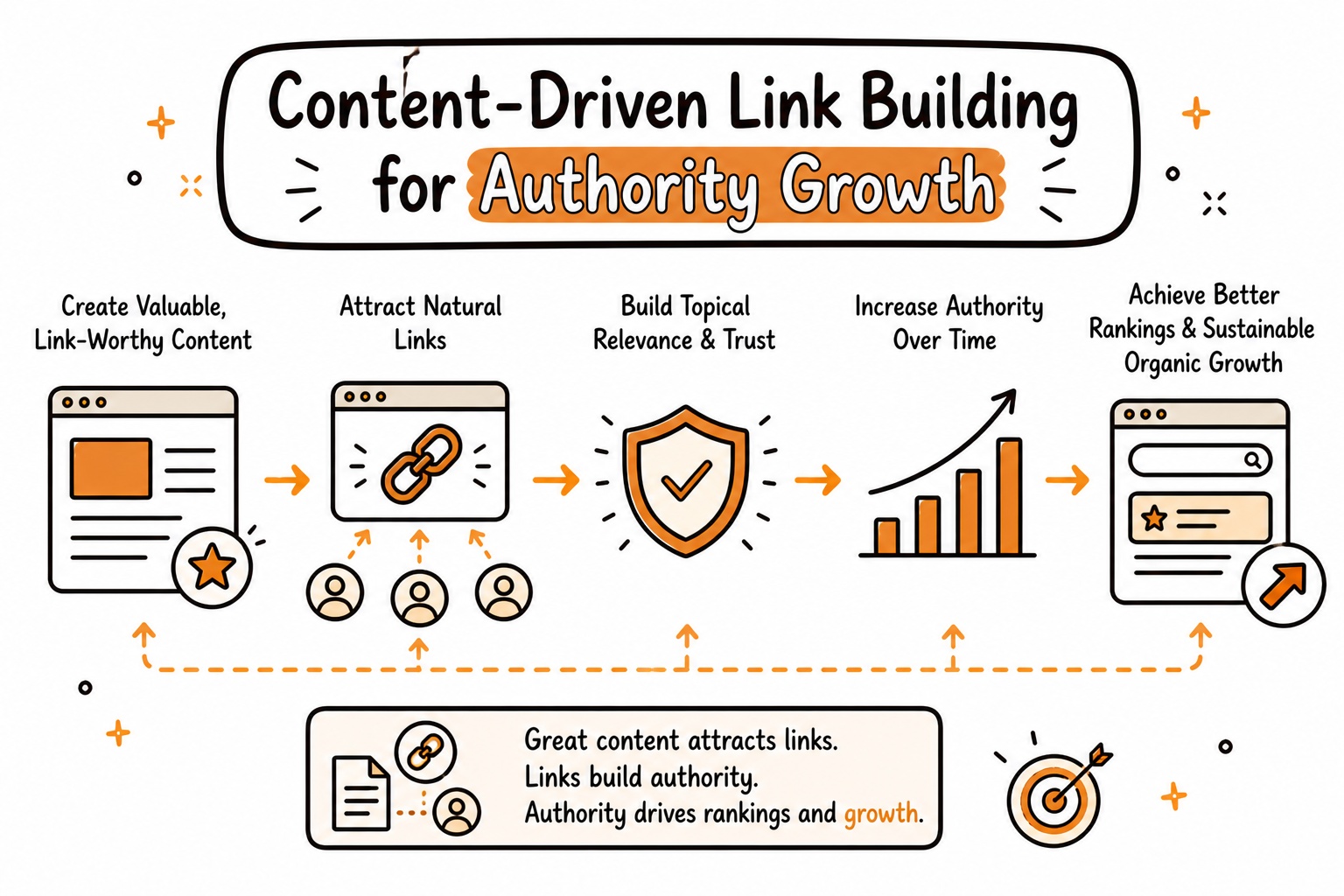
The question of how many backlinks you need is answerable — but the answer is specific to your page, your domain, and your SERP, not to a category or competition level in the abstract.
Page-level referring domains is the right metric to build around, not total backlink count or site-wide domain authority. Two studies from 2025 and 2026 both confirm this. Calculate two thresholds from your filtered SERP: an entry target from positions four through ten, and a breakout target from positions one through three. Work in stages rather than trying to match the strongest result from day one.
Before spending anything on link building, confirm that links are actually the bottleneck. More links will not fix intent mismatch, thin content, poor internal structure, or keyword cannibalization. An honest content and technical audit takes a few hours and can prevent months of wasted investment.
And finally: in 2026, building backlinks for ranking and building authority for AI citation are converging on the same activity. Earn links that are genuinely worth earning, from sources that are genuinely worth being cited by, and the benefits compound across both traditional search and the AI systems that are increasingly shaping how people find information online.

Catalin Dinca
Written by Catalin Dinca